
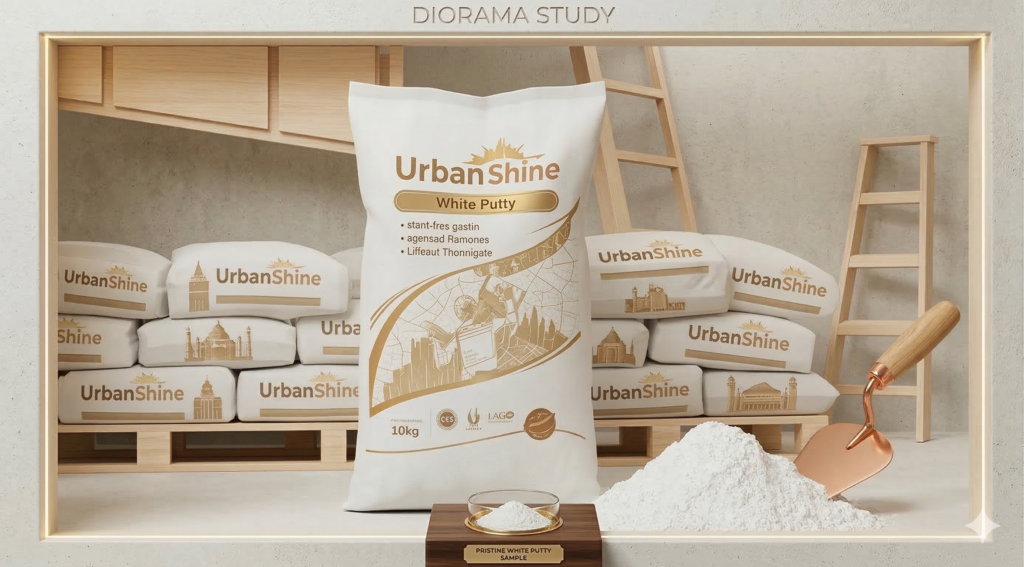
Here is how to apply it for a professional finish:
1 Surface Preparation
Clean the Wall: Remove all dust, loose particles, and oil.
Control Suction: If the wall is very dry (like old brick), lightly spray it with water. This prevents the bricks from “sucking” the moisture out of the plaster too quickly, which causes cracks.
Bonding Agent: For smooth concrete surfaces, apply a bonding agent (like a liquid hack aid) to ensure the plaster sticks firmly.
Mixing Process
Add plaster slowly into the water and mix continuously to create a smooth and lump-free paste.
2 Mixing the Plaster
Water First: Always add the gypsum powder to the water, not the other way around
Ratio: Usually, it’s a 1:2 ratio (1 part water to 2 parts powder), but check the bag’s specific instructions..
Consistency: Mix thoroughly until it looks like thick cream or paste
Timing: Gypsum sets fast (usually within 20–30 minutes). Only mix what you can use immediately.
3 Application (The Two-Coat Method)
First Coat: Use a trowel to apply a layer about 6mm to 12mm thick. Press firmly to ensure it bonds with the wall.
Leveling: Use a straight edge (aluminum foam/leveler) to flatten the surface while it’s still wet.
4 Finishing & Drying
Smoothing: As the plaster starts to set, use a clean trowel with a tiny bit of water to “polish” the surface until it’s glass-smooth.
No Sanding Needed: One of the best things about gypsum is that if applied correctly, it doesn’t require sanding like traditional cement plaster.
Drying: Let it air dry for 3–4 days before applying any paint. It will turn from a dull greyish-white to a bright, chalky white when ready.
Why use Gypsum over Cement?
Finish – Superior smooth/white finish ,Rough, needs putty after
Time– Sets and dries very fast | Needs 7–14 days of water curing
Cracks– Very low shrinkage (less cracks) , High chance of hairline cracks
Effort – Direct application to brick/block ,Requires multiple stages
Quick Note: Gypsum is strictly for indoor use. Do not use it on exterior walls or in high-moisture areas like bathrooms, as it absorbs water and can soften over time.
Would you like advice on which tools are best for a smooth “mirror” finish?